
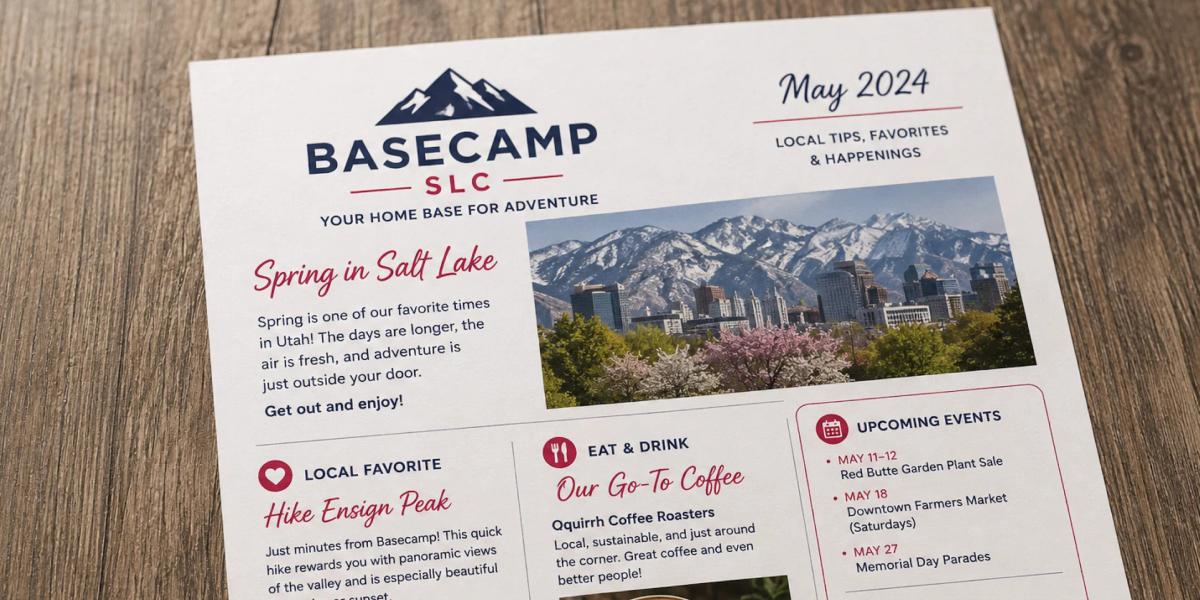
Newsletters
A physical newsletter does not disappear into an inbox. It arrives with a different kind of attention — families, donors, members, customers, and teams can hold it, return to it, share it, and keep it nearby. Regular communication should feel worth receiving.
A Physical Newsletter Does Not Disappear Into an Inbox
Have a question? Let's talk about it.
Fast & Ready
I know what I need. I am ready to make an order quickly.
Order NowBe Remembered
I want something that earns another look and leaves a lasting impression.
Explore IdeasManage at Scale
I need a better way to manage printing for my team.
Print Portal
Don’t Have Your Files?
We can recreate your existing design from either a photo, previous print or partial file.
Newsletters Work Best When They Feel Like Useful Correspondence
Format, fold, paper, layout, mailing plan, and content rhythm all affect how inviting the piece feels and how likely someone is to read past the first panel.
Format Should Serve the Content
- Format — common formats include folded self-mailers, single-sheet newsletters, multi-sheet newsletters, and booklet-style publications, and the best format depends on content volume, mailing plan, budget, and audience.
- Length and content volume — a folded self-mailer may work for shorter updates, while a booklet-style newsletter may be better for longer stories, photos, and recurring sections.
- Mailing plan — mailing should be considered early because format and weight can affect production; mailing services can help reduce the operational load for organizations that send on a schedule.
- Personalization — can include recipient names, donor segments, localized content, variable messages, or other data-driven details that make the piece feel more relevant.
- Cadence — the right cadence depends on content volume, audience expectations, budget, and internal capacity, with many organizations using quarterly, monthly, seasonal, or event-based schedules.